
Short answer: pet urine smell comes back because the urine is not in the top of the carpet. It is in the backing and the pad underneath. When it dries, it leaves salts and crystals. Every time the air gets humid, those salts take in moisture and the smell comes back. Sprays and shampoos cover the smell for a few days. The only real fix is to break down the urine with an enzyme and flush it out of the carpet and pad.
You cleaned the spot. It looked fine and smelled fine. Then a rainy week comes, or you turn the heat on in November, and the smell is back in the room. You clean it again, and a few weeks later it is back again. This is one of the most common calls our crews get, and it has a simple reason. Here is the full story, from the crews who do pet urine odor removal on Long Island every week.
This guide explains what really happens under your carpet, which home fixes help and which make it worse, what a professional treatment does, when the pad has to be replaced, and how to stop your dog or cat from going back to the same spot.
Why the smell comes back: the science in plain words
Fresh urine is mostly water. But it also carries urea, uric acid, salts, and bacteria. Each one plays a part in the smell.
- Urea breaks down after a short time, and bacteria turn it into ammonia. That is the sharp smell of a fresh accident.
- Uric acid dries into tiny crystals and salts. These do not wash away with plain water, and they stick to the fibers, the backing and the pad.
- Bacteria keep feeding on the old urine. Over time they make a stronger, stale smell that many people describe as "musty" or "like a barn".
When the spot dries, the water is gone but the crystals and salts stay. They are dry and quiet, so the room may smell fine. But these salts pull moisture out of the air. When the air is humid, they get damp again and start to smell again. That is why a spot can smell fine on a dry winter day and bad on a wet summer day. The urine never left. It was just waiting for moisture.
Why it is worse on Long Island
Long Island homes give urine salts a lot of moisture to work with. Summers are humid, many homes are close to the water, and fall brings weeks of rain. Basements are a big problem. A carpet laid over a concrete floor stays cooler and damper than the rest of the house, so old spots there smell the most.
Winter has its own problem. When the windows close and the heat goes on, there is no fresh air, so any smell stays in the room. Many people first notice an old pet spot in November or December, even if the accident happened in the summer.
Tip from our crews: if a room smells worse after it rains, or right after you mop or steam the floor, you almost always have old urine under the carpet. The moisture is waking it up.
Where the urine really goes
A carpet is not one layer. It is four, and urine moves down through all of them. What you see on top is only a small part of the problem.
The pad is the key. It works like a kitchen sponge. A small spot on top can turn into a wet area in the pad that is much bigger than the stain you see. That is why cleaning only the visible spot so often fails.
7 home fixes that make it worse
Most people try to fix it themselves first, and that makes sense. But some common fixes push the urine deeper or make the smell harder to remove later.
For safe first steps on most household stains, see our DIY carpet stain removal tips.
Home fixes vs. professional treatment
| Store spray | Rental machine | Enzyme + extraction | |
|---|---|---|---|
| Reaches the pad | No | Partly | Yes |
| Breaks down urine salts | Only enzyme sprays, on the surface | No | Yes |
| Finds hidden spots | No | No | Yes, with moisture meter and UV light |
| Pulls the urine out | No | Some, leaves the pad wet | Yes, hot water and sub-surface extraction |
| Usual result | Smell back in days | Smell back, sometimes stronger | Smell removed in most homes |
What to do in the first 10 minutes
If you catch an accident while it is fresh, you can stop most of the damage before it reaches the pad.
- Blot, don't rub. Press a thick stack of white paper towels or an old white towel on the spot. Stand on it. Change towels until they come up almost dry.
- Use very little water. Dampen the spot lightly with cool water and blot again. Do not soak it.
- Use an enzyme cleaner made for pet urine. Follow the label and give it the full time it says. Enzymes need time to work.
- Let it dry with air. A fan helps. Keep the pet away from the spot until it is fully dry.
- Mark the spot. If the smell comes back on a humid day, you will know exactly where the problem is.
Worried about cleaners and your animals? Read can carpet cleaning be harmful to my dog.
How we remove pet urine odor
A real pet treatment is not a stronger shampoo. It is a process that goes after the urine in every layer. This is how our crews do it.
Find every spot
A moisture meter and a UV light show where urine is, including old spots you can't see.
Enzyme treatment
Each spot gets an enzyme that breaks down the urine salts, and time to work.
Flush it out
Hot water extraction rinses the carpet and as much of the pad as possible.
Sub-surface tool
For heavy spots, a sub-surface extraction tool pulls straight from the pad.
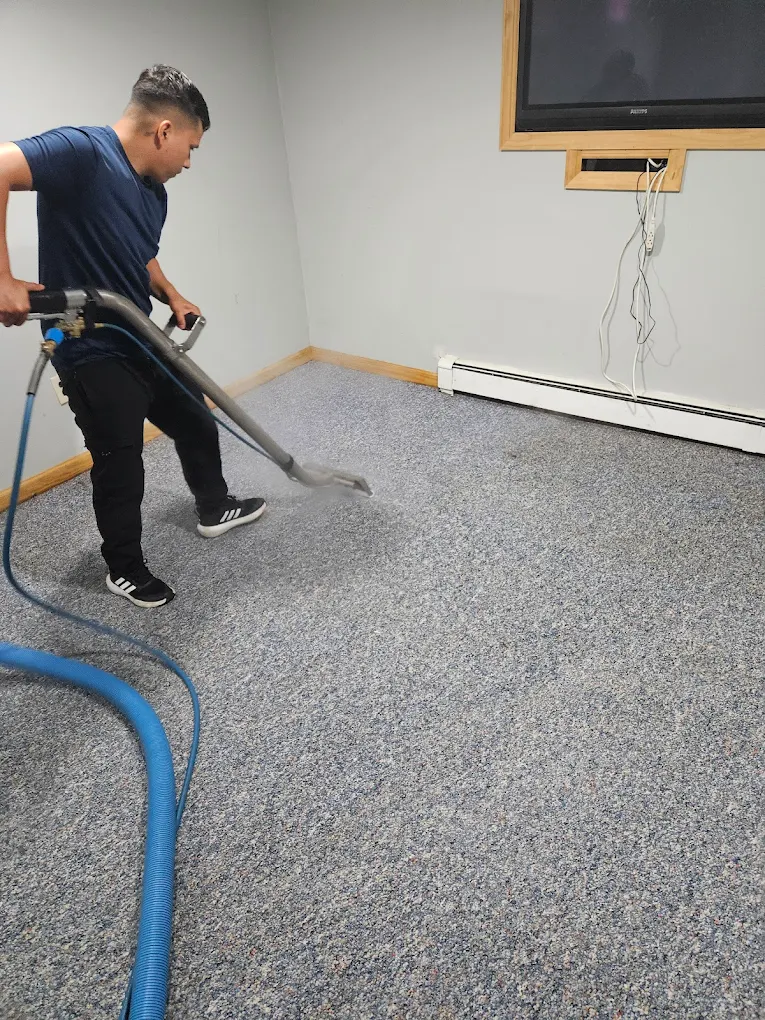
After the treatment, the carpet gets a deodorizer and is left to dry. Once dry, the treatment is safe for pets and children. If the whole room needs a refresh too, the pet treatment is added on top of a normal carpet cleaning visit, so the room is done in one trip.
If you have small kids or a pet that lies on the floor all day and you want the gentlest products, ask about our organic carpet cleaning.
When the pad has to be replaced
We will always tell you the truth here. In most homes, enzyme treatment and extraction remove the smell. But if a pet has used the same corner again and again for months or years, the pad under that spot can be fully soaked. No cleaning gets all of it out.
Signs the pad may need to go:
- The smell is strong even when the carpet is dry and the weather is dry.
- You press on the spot and it feels stiff or crunchy underneath.
- The same spot has been cleaned many times and the smell keeps coming back.
- The spot is along a wall or in a corner the pet has used for a long time.
In that case, the best fix is to replace that section of pad. A small pad patch is often cheaper than paying for repeated cleanings that never fully work.
About yellow stains: the odor can almost always be removed, but some old urine changes the carpet dye. That leaves a light or yellow spot even after the urine is gone. We point those out before we start, so there are no surprises.
Area rugs, sofas and mattresses
Area rugs are different from wall-to-wall carpet. Urine goes through the rug into its foundation, and often into the floor under it. A rug with urine is best picked up and washed off-site, where the whole rug can be flushed. Read more on our rug cleaning page. Wool and hand-knotted rugs need extra care because their dyes can bleed, so see oriental rug cleaning before you try anything at home. For everyday synthetic rugs, our area rug cleaning page explains the options.
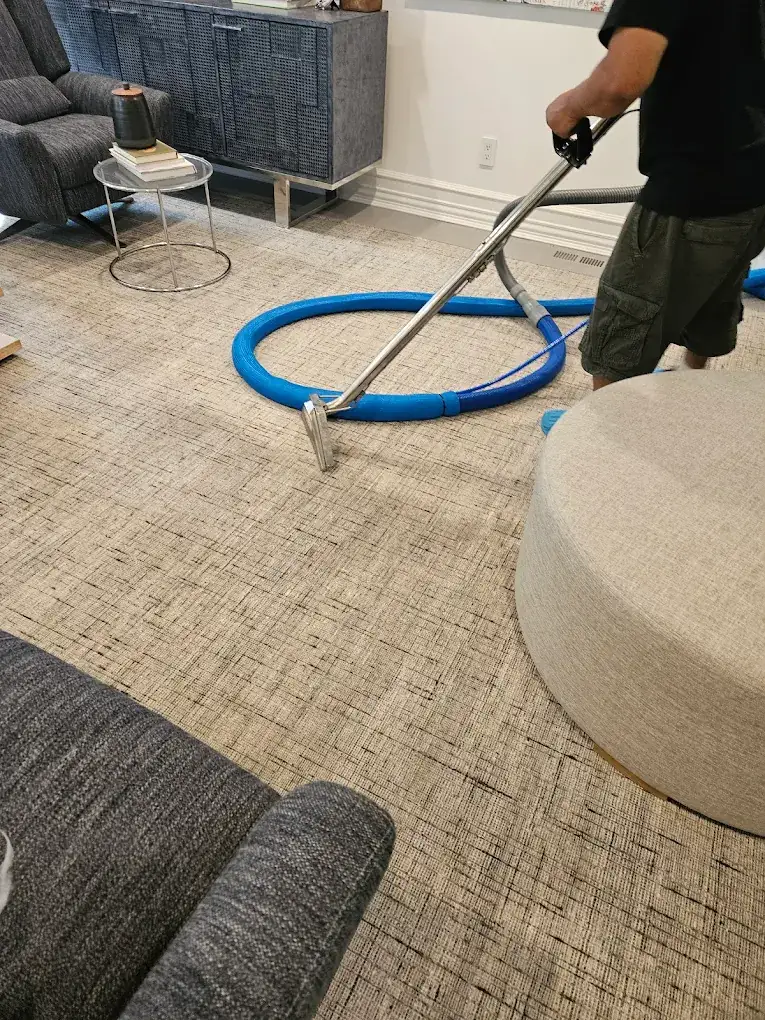
Sofas and chairs get the same enzyme treatment in your home. Cats and older dogs often pick one favorite cushion, and the smell can sit deep in the foam. Tell us which seat it is when you book couch cleaning. For chairs, ottomans and other furniture, see upholstery cleaning.
Mattresses are a common problem with puppies, older pets and pets that sleep in the bed. The urine goes into the foam layers. A mattress cleaning with odor treatment is much cheaper than a new mattress.
Stop it from coming back
Removing the smell is half the job. The other half is making sure your pet does not go back to the same place.
- Clean new accidents the same day, before they dry into salts.
- Keep an enzyme cleaner made for pet urine at home, not a perfume spray.
- Treat the whole room, not only the spots you can see. Pets return to spots they can smell, even if you can't.
- Take the dog out more often in cold or rainy weather, when accidents go up.
- Put a washable runner or a pet pad in the problem area for a few weeks after cleaning.
- Check with your vet if a trained pet suddenly starts having accidents.
- Keep the house air dry in summer with AC or a dehumidifier, especially in finished basements.
For daily habits that keep carpet fresh with pets, see our pet owner's guide to clean carpet. And if you are wondering about germs too, read is it necessary to sanitize and disinfect your carpet.
What pet odor removal costs
Pet treatment is added to a carpet, rug or upholstery cleaning and priced by the number and size of the areas. Our carpet cleaning starts at $119 for one room of any size. You get the price before we start, so there are no surprises at the end. Booking online takes $20 off any service. For a full breakdown, read how much carpet cleaning costs on Long Island.
Guests coming tomorrow and the room still smells? We are open 24 hours, 7 days a week, and you can ask about same-day carpet cleaning.
Around Long Island
We treat pet odor in homes all over Nassau and Suffolk from our shop in Deer Park. That includes towns like Massapequa, Levittown, Port Washington, Smithtown and Patchogue. See every town on our service areas page, or learn more about Long Island carpet cleaning.
Pet smell back again? We find every spot, treat it with enzyme and pull it out of the pad. The price is confirmed before we start, and booking online takes $20 off.
Call (516) 708-0278 Book online, save $20