Short answer: thin or bare spots in a wool rug or carpet, mostly under furniture and along the walls, are often carpet beetle or clothes moth larvae. They feed in dark, quiet places, and they like soiled wool best. Vacuum those hidden spots, get the rug professionally cleaned, store rugs clean and dry, and call pest control if you see them in more than one room.
Most people find this problem by accident. You move the bed or a dresser for the holidays and the rug underneath is thin, with small bald patches and loose tufts. Or you unroll a rug that sat in the attic all summer and see little holes. This guide shows you how to read the signs, what to do this week, and how our wool rug cleaning on Long Island fits in. We are carpet and rug cleaners, not exterminators, so we will also tell you when to call one.
Who is eating your rug
Two kinds of insects cause almost all of this damage in Long Island homes: carpet beetles and clothes moths. In both, the adults are not the problem. Utah State University Extension explains that clothes moth larvae are the stage that destroys fabric, while the adult moths are harmless. Cornell Cooperative Extension of Nassau County says the same about beetles: the larvae cause the feeding damage, and the adults fly outdoors in spring to feed on flower pollen.
The same Nassau County page notes there are four species of carpet beetle here. You do not need to know which one you have. What matters is that the larvae eat natural animal fibers: wool, hair, fur, feathers and hide. A wool rug, a wool wall-to-wall carpet, a felt pad and the pet hair stuck in all of them are food.
Where the damage starts
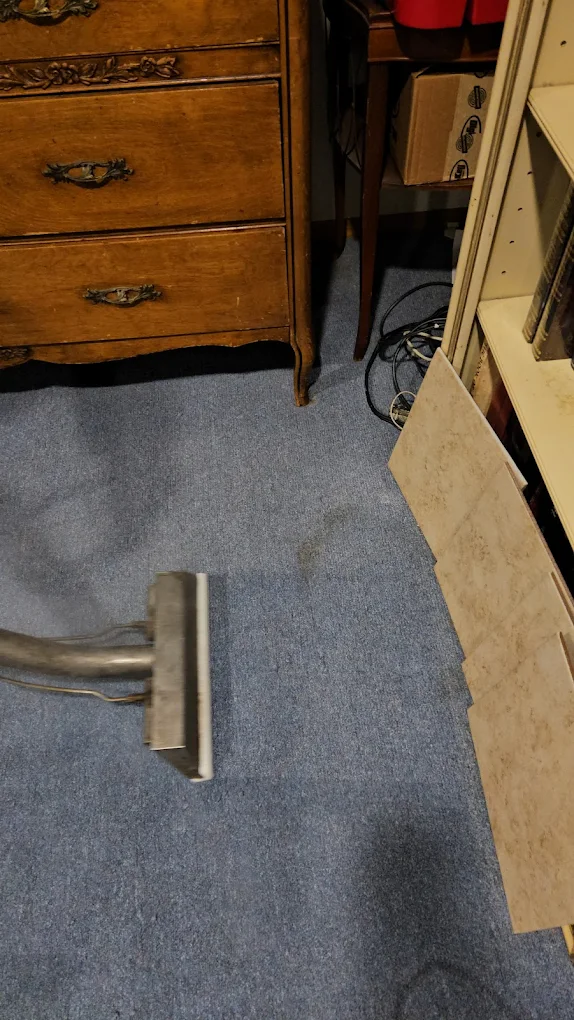
Larvae do not like light or traffic. They feed where the rug is dark and nobody steps. In a typical Long Island cape, ranch or colonial, we see damage first in the same places:
- Under beds, dressers, sofas and the piano, where the vacuum never goes
- Along baseboards and behind radiators, where lint and hair collect
- Bedroom closets with carpet on the floor
- Rugs in guest rooms and formal living rooms that are rarely used
- Rugs rolled up in attics, basements, garages and closed-up summer homes
The Nassau County extension page adds that carpet beetle larvae can crawl from room to room and live behind baseboards, moldings, in cracks and behind radiators. So one damaged rug can mean the problem is in the room, not only in the rug.
Signs to look for
- Thin or bald patches in the pile, often in a line along the wall or in the shape of the furniture that stood there.
- Loose tufts that come up when you run your hand over the rug.
- Tiny shed skins, light brown and hairy, left behind by beetle larvae as they grow.
- Silky webbing or small cases. Utah State notes some clothes moth larvae spin a feeding tube of fibers and silk, and others carry a small silk case.
- Small beetles on a sunny window sill in spring, or small dull moths that flutter low and avoid light.
Tip from our crews: flip a corner of the rug and look at the back. On a hand-knotted rug, bare spots in the knots on the back, or damage on the fringe and edges, often show up before you notice anything on the front.
Why dirty wool is the first target
Clean wool can still be eaten, but soiled wool is far more attractive. Utah State says clothes moth larvae prefer items stained with beverages, urine, oil and sweat. That is why the spot where the dog sleeps, the corner by the dining table and the rug under a child's bed are often hit hardest. Old pet accidents are a double problem, and our pet stain and odor removal page explains how we flush them out.
Wool wall-to-wall carpet is at risk too, mostly at the edges and inside closets. Synthetic carpet is rarely eaten, but the hair, lint and crumbs in it can still feed larvae, which is one more reason a regular carpet cleaning Long Island visit matters, even in the rooms you do not use every day.
Found thin spots or loose tufts? We inspect the rug, check for moth and beetle damage before we start, and clean it with a wool-safe method in your home or with a full wash at our shop. Rug cleaning starts at $119, and booking online takes $20 off.
Call (516) 708-0278 Book online, save $20What to do this week
Start with the simple steps. The Nassau County extension advises using the least toxic methods first, and most of them are about cleaning:
Move and vacuum
Pull out the furniture and vacuum slowly under it, along baseboards and carpet edges, with strong suction.
Both sides
Vacuum the back of area rugs and the floor under them, then the rug pad.
Empty it outside
Throw out the bag or empty the canister outdoors, the same day.
Check other rooms
Look in closets, under beds and in stored rugs, wool blankets and sweaters.
Small items like a wool throw or a doormat can be frozen: Utah State says freezing infested fabrics for a few days can kill eggs and larvae, and the Nassau County page suggests at least 72 hours in freezing conditions for furniture. A full-size rug does not fit in a freezer, which is where a professional wash comes in.
What a professional cleaning can and cannot do
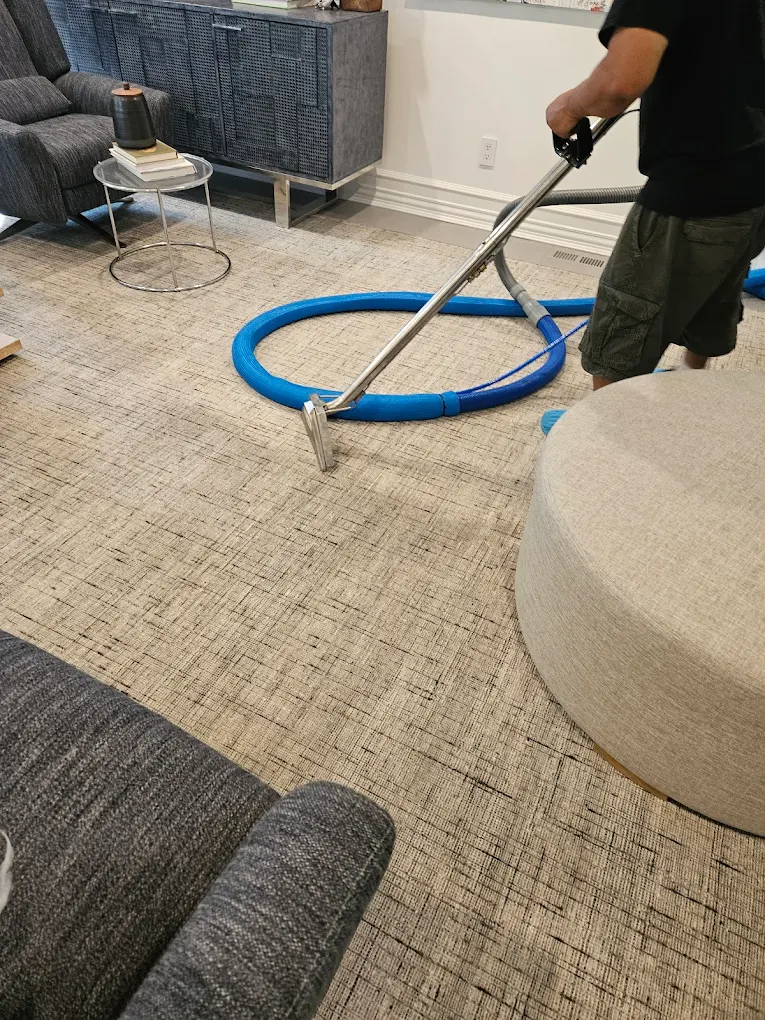
Cleaning takes away what larvae need: the eggs and larvae themselves, the hair and lint, and the food and body soil in the fibers. Our wool rug service already includes a moth check, so we look at the edges, the fringe and the back before we start. Machine-made and tufted wool rugs can often be cleaned on your floor with a wool-safe, low-temperature rinse. Hand-knotted rugs, very dirty rugs and rugs with urine are better picked up for an off-site wash, where they are dusted, washed on both sides, rinsed and dried flat. Our guide on in-home vs off-site rug cleaning explains how we decide.
A real note from our schedule: since the start of October our crews have been picking up area rugs from homes across Nassau and Suffolk for off-site washing, and the fall is when many families roll rugs back out or get them ready for the holidays.
| Question | Vacuuming at home | Professional rug cleaning |
|---|---|---|
| Larvae and eggs on the surface | Many, if you reach the hidden spots | Removed from the whole rug |
| Hair, lint and soil deep in the pile | Very little | Washed and rinsed out |
| Old spills, sweat and urine | No | Pre-treated and flushed |
| Insects behind baseboards and in closets | Partly | No, that is pest control |
| Holes and bald spots | No | No, those need a rug repair |
When it is more than one rug, or you see insects in several rooms, call a licensed pest control company. The Nassau County extension says heavy infestations in hard-to-treat places may need a pest control operator. The best order is usually: clean the rugs, treat the room, then bring clean rugs back.
Mistakes that make it worse
Storing rugs and closing up a house
Many Long Island families store rugs: a summer rug that comes up in the fall, a rug from a parent's house, or the rugs in an East End home that sits empty all winter. Have the rug cleaned first, let it dry fully, roll it with the pile facing in, and keep it off the floor in a dry, cool place, not a damp basement corner. Check it a couple of times a year. Our post on closing up a Hamptons home for winter covers seasonal houses, and our antique rug care guide covers older and fragile rugs.
Tip from our crews: rotate area rugs half a turn once or twice a year. It evens out wear and sun, and it moves the dark corner under the furniture into the light where you will notice a problem early.
Which rugs we see hit most
Wool area rugs of every kind, from machine-made to hand-knotted oriental rugs and Persian rugs. Wool runners on the stairs, at the edges where the vacuum misses. Wool and felt rug pads. Fabric furniture with wool or down can also hold larvae, so if the sofa sits on a damaged rug, ask about upholstery cleaning on the same visit. For everything else, see our main rug cleaning page and area rug cleaning page. Dust from the same hidden spots also bothers allergic families, as we wrote in carpet and indoor allergies.
Rug care around Long Island
We clean rugs and carpet in every town in Nassau and Suffolk. Our crews work in towns like Locust Valley, Oyster Bay, Hewlett, Malverne, Huntington, Babylon and Southampton. See every town on our service areas page, or start at our Long Island carpet cleaning home page.
Protect the rugs you love. In-home wool rug cleaning starts at $119, off-site washing is priced by size after we inspect the rug, and you approve the price before we start. Booking online takes $20 off. We answer the phone 24/7.
Call (516) 708-0278 Book online, save $20