
Short answer: a leather sofa needs three simple things to last: regular dusting, quick and gentle care for spills, and a real clean plus conditioner every 6 to 12 months. Body oil and dirt build up on the arms, headrests and seats, and over time they break down the finish so the leather dries out and cracks. Never use steam, soaking, bleach or all-purpose cleaners on leather. Know which type of leather you have first, because the gentle kind (aniline) stains much more easily than the common protected kind.
A good leather sofa can stay soft and good-looking for many years. But leather is skin, not fabric, and it does not forgive the same things a fabric couch does. The wrong wipe, a sunny window or a hot heater vent can do more damage in one season than years of normal use. This guide comes from the crews who do leather couch cleaning on Long Island from our shop in Deer Park, and it covers what we wish every leather owner knew.
You will learn how to tell which leather you have, a simple weekly and monthly routine, what to do in the first minutes after a spill, the home fixes that ruin leather, how a professional clean and conditioning works, and when a problem needs a leather repair specialist instead of a cleaner.
Know your leather first
Almost every mistake with leather starts with treating all leather the same. There are three main types used on sofas and chairs, and they behave very differently.
- Pigmented (protected) leather. This is what most leather sofas are made of. The leather has a colored coating and a clear top coat on it. It is durable, it hides small marks, and it cleans well. Spills tend to sit on top for a short time before they soak in.
- Semi-aniline leather. This has a light protective coat. It feels softer and looks more natural than pigmented leather, but it marks more easily. It needs a gentler hand.
- Aniline leather. This is dyed leather with little or no protective coat. It feels very soft and warm, and it shows the natural grain. It also soaks up water, oil and stains fast, and it can darken where you touch it. Aniline leather needs the gentlest care of all.
How do you tell at home? Look at the tag or the paperwork from the store first. If there is nothing, put one small drop of water on a hidden spot, like the back near the floor. If the drop sits on top and beads, the leather is most likely protected. If it soaks in and darkens the spot in a few seconds, you probably have aniline or a light semi-aniline leather. Let the spot dry on its own and do not rub it.
Tip from our crews: if your sofa feels like soft suede when you run your hand across it and changes color a little where you press, treat it as aniline. Use only a dry soft cloth at home, and call a pro for anything more.
What is on top of your leather
A protected leather sofa is not just one material. It has layers, and the job of cleaning is to remove dirt from the top without hurting the layers under it.
When the top coat wears down on the arms and headrests, oils and dirt reach the color layer. That is when you see shiny dark patches, color rubbing off and, later, small cracks. A gentle clean keeps the top coat working. Conditioner keeps the leather fibers under it from drying out.
A simple weekly and monthly routine
Leather care does not take long. A few minutes on a regular schedule does more than one big effort a year.
Every week:
- Dust the whole sofa with a dry, soft microfiber cloth.
- Vacuum the seams, the creases and under the cushions with a soft brush tool. Crumbs and grit in the seams act like sandpaper when you sit down.
- Look at the arms and headrests. These are the first places to show trouble.
Every month:
- Wipe protected leather with a cloth that is only slightly damp with clean water, then dry it right away with a second cloth.
- Flip and rotate loose cushions so they wear evenly.
- Check for spots where the color looks lighter or the leather looks dry.
Every 6 to 12 months: a full clean with a cleaner made for leather, followed by conditioner. Homes with pets, kids or heavy daily use should lean toward every 6 months. This is the same rhythm we suggest for keeping an upholstered sofa clean, only with leather products instead of fabric ones.
Long Island seasons and your leather
Leather reacts to the air around it. On Long Island, the seasons push it in two directions.
Winter is the hard time. The heat runs for months, and many homes have baseboard heat, radiators or a forced-air vent near the living room wall. Warm, dry air pulls moisture out of leather. A sofa pushed right up against a heater or vent can dry out and crack along the back and arms much faster than the rest. Leave some space between the sofa and any heat source, and plan your conditioning for late fall so the leather goes into winter in good shape.
Summer brings the opposite problem. It is humid, and people sit on leather in shorts after the beach or the pool. Sweat, sunscreen and body oil soak into the seat and the headrest. In a damp basement den, leather can also pick up a musty smell. Run the AC or a dehumidifier in finished basements, and wipe the seats more often in the warm months.
Sun matters all year. Many Long Island homes have big windows and sunrooms. Direct sun fades leather and dries it out, and aniline leather fades fastest. Use blinds or curtains in the strongest hours, or move the sofa out of the direct light.
What to do in the first few minutes after a spill
Speed matters more with leather than with fabric, especially with aniline. Here is what to do.
- Blot right away. Use a clean, dry white cloth or paper towel. Press gently to lift the liquid. Do not rub, because rubbing pushes it into the grain and spreads it.
- Do not add water to a big area. On protected leather, you can wipe the spot with a cloth that is barely damp. On aniline, use only a dry cloth.
- Let it air dry. Never use a hair dryer or put the cushion near a heater. Heat makes leather shrink and stiffen.
- Grease and oil spots: blot what you can, then leave it. Oil often spreads out and fades on its own over a few days. Do not use dish soap or a degreaser on leather.
- Ink and dye: do not try alcohol or hairspray. Both can lift the color with the stain. Call a professional.
- If it is still there after it dries, leave it for a pro rather than trying stronger products.
For spills on carpet and fabric, our DIY stain removal tips cover the safe first steps. Most of them are not right for leather, so keep the two separate.
7 common mistakes that ruin leather
We see the same damage again and again, and most of it starts with a product that seemed like a good idea.
If you are not sure a product is safe, test it on a hidden spot and wait a full day before you use it anywhere else. If you still are not sure, do not use it.
Home wipes vs. a professional leather clean
Home care is important, but it is not the same as a real clean. Here is the honest difference.
| Dry cloth and vacuum | Store wipes or sprays | Professional clean + condition | |
|---|---|---|---|
| Removes dust and crumbs | Yes | Some | Yes, including deep in the seams |
| Removes body oil on arms and headrests | No | Partly, often leaves residue | Yes, with a pH-balanced leather cleaner |
| Safe for the leather type | Yes | Not always, many dry out leather | Yes, the type is checked first |
| Keeps leather soft | No | Rarely | Yes, conditioner after cleaning |
| Best use | Every week | Better to skip | Every 6 to 12 months |
How we clean and condition a leather sofa
A professional leather clean is done by hand, not with a big machine. There is no steam and no soaking. This is how our crews do it.
Check the leather
We identify pigmented, semi-aniline or aniline first, because each one needs a different touch.
Dry soil out
Seams, creases and under the cushions are vacuumed so grit does not scratch during cleaning.
Gentle clean
A pH-balanced leather cleaner and soft brushes lift oil and dirt from arms, headrests, seats and seams.
Condition
Conditioner goes on after cleaning to keep the leather supple and help stop cracking.
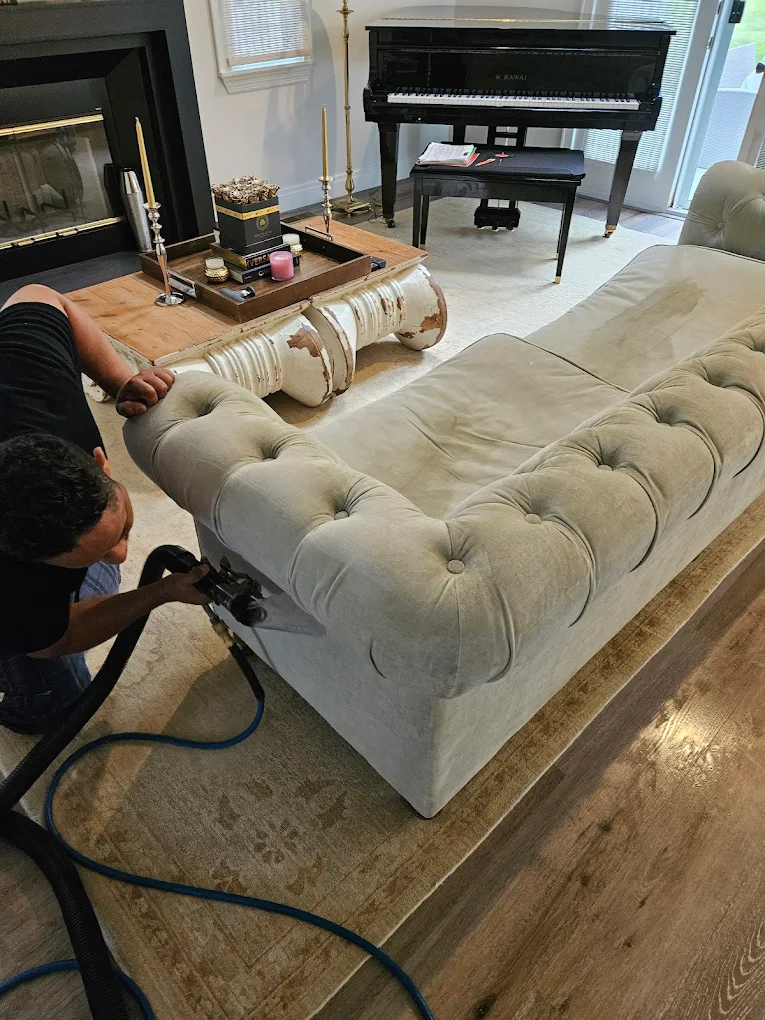
The sofa is ready to use within about an hour. The price starts at $119, and it depends on the piece and its size. You get the price before we start, and booking online takes $20 off. If you also have fabric chairs or a fabric sectional in the same room, they can be done in the same visit with our upholstery cleaning, so it is one trip for the whole room.
Common leather problems and what they mean
Dark, shiny arms and headrests. This is body oil and hair products that have built up over time. A professional clean usually brings back much of the original look. If the finish has already worn through, the color under it may stay a little darker.
Blue marks from jeans. New dark denim can rub dye onto light leather. On pigmented white or cream leather, cleaning often removes most of it. Sometimes it only lightens. Lay a throw on the seat if you wear new jeans.
Dry, stiff or faded patches. Usually from sun or heat. Conditioning helps soft leather stay soft, but it cannot bring back color that the sun has taken out.
Cracks, tears and peeling. We will be honest here: cleaning and conditioning do not repair cracks or torn leather, and they do not restore color loss. Those need a leather repair specialist. What cleaning can do is stop the leather around the damage from getting worse.
Pet scratches and pet accidents. Light scratches on protected leather are only in the top coat. Deep scratches need repair. If a pet has an accident on leather, blot it fast and call us. Urine sits in the seams and cushions, and our pet stain and odor removal team can tell you what can be done. For daily life with pets, see our pet owner's guide to clean carpet.
Leather vs. fabric: why the care is different
Many homes have a leather sofa and fabric chairs, or a fabric couch in the den and a leather recliner in the bedroom. The two need very different care, and mixing them up causes damage.
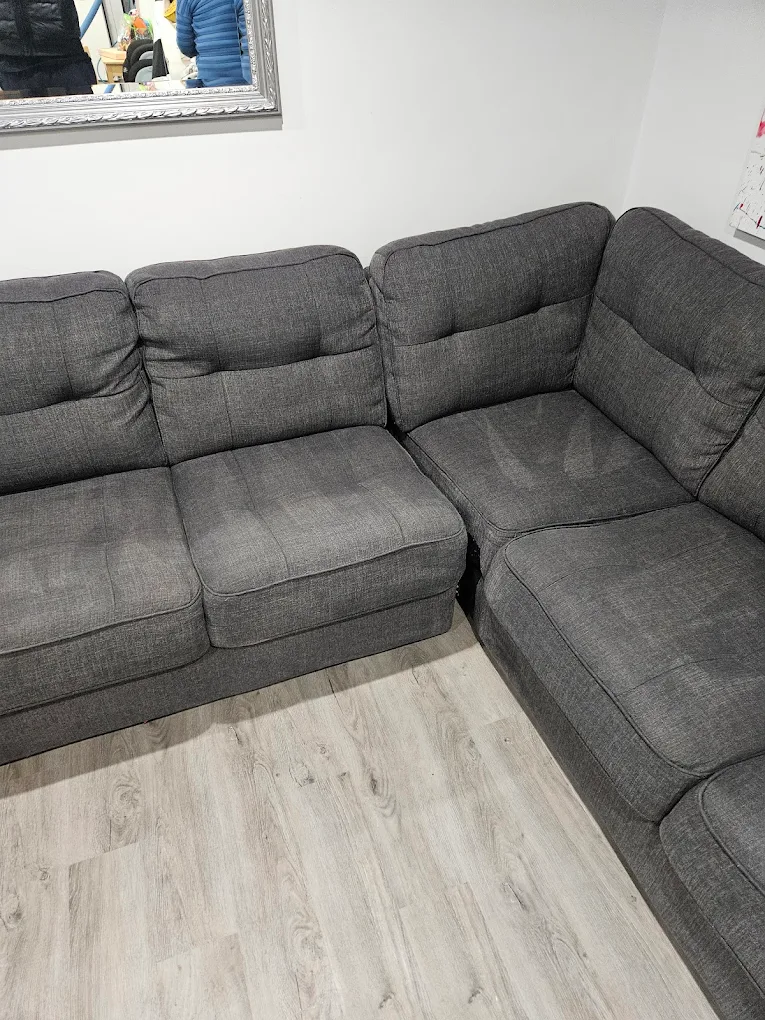
Fabric is cleaned with water or solvent, depending on the cleaning code on the tag. Our guide to sofa fabric cleaning codes explains what W, S, W/S and X mean. A fabric couch is often cleaned with hot water extraction during a couch cleaning visit, and delicate fabrics like velvet and linen go through our fabric upholstery cleaning. Leather is never treated that way. It gets a leather cleaner, soft brushes and conditioner.
When you book, tell us which pieces are leather and which are fabric. That way the crew brings the right products for each one, and the price you get covers the whole room.
What leather sofa cleaning costs
Leather furniture cleaning starts at $119 and is priced by the piece and its size. A single chair, a loveseat, a three-seat sofa and a big sectional with a recliner are all different jobs. You get the exact price before we start, so there are no surprises at the end. Booking online takes $20 off any service. For a full look at what changes the price of sofa and sectional cleaning, read how much it costs to get a couch professionally cleaned on Long Island.
Many people add the leather sofa to a fall visit for their carpets, before the holidays. Our page on carpet cleaning Long Island shows what that visit includes. A bedroom mattress cleaning is another easy add-on in the same trip. And if guests are coming and the sofa cannot wait, we are open 24 hours, 7 days a week. Ask about same-day service.
Not sure who to call for your furniture? Ask any company three questions before you book: do they check the leather type first, what cleaner do they use on leather, and do they condition after cleaning. If the answer to the first one is no, or they plan to steam it, keep looking.
Around Long Island
Our crews clean and condition leather sofas, chairs and recliners all over Nassau and Suffolk from our shop in Deer Park. That includes towns like Roslyn, Plainview, Oceanside, Wantagh, West Islip, Babylon, Kings Park and Centereach. See every town on our service areas page, or learn more about Long Island carpet cleaning.
Leather sofa looking tired? We check the leather type, clean it gently with a pH-balanced cleaner and condition it so it stays soft. The price is confirmed before we start, and booking online takes $20 off.
Call (516) 708-0278 Book online, save $20