Short answer: the letter on your sofa tag tells you what can safely touch the fabric. W means water-based cleaners are fine. S means solvent only, with no water. W/S means either one can be used with care. X means vacuum and brush only, with no liquid cleaner of any kind. Using the wrong method is how sofas end up with brown rings, shrunken covers or a stiff, rough feel. Find the tag, test a hidden spot, and when in doubt, blot only and call a pro.
Most people never look at the tag under their sofa cushions until something spills. Then they scrub, and a small spot turns into a big ring. That ring is almost always a fabric code problem. Our crews read these tags on every job, because it is the first step of upholstery cleaning on Long Island done the right way.
This guide explains what each code means in plain words, where to find the tag, why water ruins some fabrics, which fabrics usually carry which code, how to spot-clean safely at home, and when a sofa should only be touched by a professional. It also covers what to do when the tag is missing.
A cleaning code is a short letter that the furniture maker puts on a tag to tell you how the fabric can be cleaned. It is not about how strong the fabric is, or how much it cost. It is about how the fibers and the dyes react to water and to cleaning solvents.
Two sofas can look the same and still need very different care. A polyester sofa may take a full rinse with no trouble, while a linen blend can ring from one glass of water. The code tells you which one you have.
Most upholstered furniture sold in the US uses the same four codes. Once you know them, you can read any tag in a few seconds.
The four codes, from easy to hard
Think of the codes as a ladder. W is the easiest fabric to care for, and X is the one that needs the most caution.
W, for water. These fabrics take water well. Most are synthetics like polyester, olefin and nylon, or blends that are mostly synthetic. They are the most forgiving fabrics for families, pets and busy living rooms. Even so, too much water can soak the foam under the fabric, so "safe for water" never means "soak it".
S, for solvent. These fabrics react badly to water. They may shrink, bleed, water-mark or turn brown as they dry. They are cleaned with a dry solvent made for upholstery, which lifts oils and soil without wetting the fibers the way water does. Many natural fibers and many microfiber sofas carry this code.
W/S, for both. These fabrics can handle either method. That gives a cleaner more options, but it does not mean anything goes. A gentle approach is still the right one.
X, for vacuum only. These are the most delicate fabrics. No water and no solvent should be used at home. Light vacuuming and soft brushing are the only safe care. We will always tell you honestly if an X piece should not be wet-cleaned at all.
Where to find the tag on your sofa
The code is usually printed on a small white or cream label. On many sofas it is hiding in one of these places:
- Under the seat cushions. Lift each cushion and look at the deck, the fabric platform the cushions sit on. This is the most common place.
- On the cushions themselves. Check the zipper side of each cushion, or a small tag sewn into a seam.
- Under the frame. Tip the sofa back carefully, or look under the front edge. Some makers staple the label to the dust cover on the bottom.
- On the back or side panel. A few brands sew the label low on the outside back.
- In your paperwork. The receipt, the order sheet or the care card that came with the sofa often lists the code and the fabric name.
Look for a single letter, or a line such as "Cleaning code: S". Some tags also list the fiber mix. When you book a cleaning, telling us both helps us plan the right method.
Tip from our crews: take a photo of the tag with your phone the day the sofa is delivered. Tags fade, get cut off, or end up under a cushion you never move. A photo means you will always know the code when you need it.
Why water ruins some fabrics
It seems strange that plain water could damage a sofa. But water does several things to delicate fibers that you only see once the spot dries.
- Brown rings. Plant-based fibers like cotton, linen, jute and rayon hold natural colors deep inside. When they get wet and dry slowly, the water carries that color to the edge of the wet area and leaves a tan or brown line. It is the most common ring we see on light sofas.
- Water marks. On some fabrics, water changes the way the surface catches light. You end up with a clean spot that looks lighter or darker than the rest of the cushion.
- Shrinking. Some fabrics tighten when wet and do not relax when dry. A cushion cover that shrinks even a little may no longer zip closed.
- Dye bleeding. Some dyes move when wet. A red stripe can bleed into a cream stripe, or a dark piping can stain the fabric next to it.
- Texture change. Velvet can crush, and some blends can turn stiff or rough. The fabric may still be clean but feel very different under your hand.
Once a fabric shrinks or a dye bleeds, cleaning cannot undo it. Choosing the right method first is the only real protection.
Why it matters more on Long Island. Long Island summers are humid. Many homes are close to the water, and plenty of families have a finished basement where the sofa sits on a cool floor with damp air around it. In that kind of air, a wet spot on a sofa dries slowly. Slow drying is exactly what makes brown rings and water marks worse, because the water has more time to move color to the edge.
In winter, the family is inside more and the holidays bring food and drinks onto the couch, so people spot-clean more. If you are getting the living room ready for guests, our guide to carpet and sofa cleaning before Thanksgiving has a simple timeline.
Which fabrics usually get which code
The tag always comes first. But if you know the fabric, you can often guess the code before you find it. Here is how common upholstery fabrics usually line up.
| Fabric | Usual code | What goes wrong at home | How we clean it |
|---|---|---|---|
| Polyester, olefin, nylon | W or W/S | Over-wetting soaks the foam and can leave a musty smell | Full hot water rinse with controlled moisture |
| Cotton and cotton blends | W/S or S | Brown rings and shrinking | Gentle, low-moisture clean after a spot test |
| Linen | S or W/S | Rings, stiffness and wrinkling | Gentle, low-moisture or dry-solvent clean |
| Rayon and viscose blends | S | Water marks and a rough, stiff feel | Dry solvent, never a heavy rinse |
| Microfiber | S or W/S | Water spots and rings that look worse than the stain | Solvent and a brush to lift the pile |
| Velvet | S or W/S | Crushed pile and shiny patches | Careful cleaning, then the pile is brushed and groomed |
| Silk and delicate weaves | X or S | Permanent marks from almost any liquid | Vacuum and brush, with honest advice before anything wet |
Microfiber deserves its own note. It is popular with Long Island families because it feels soft and hides pet hair, but it is famous for water spots. Our microfiber couch cleaning page explains how we bring back the soft feel without leaving rings. For cotton, linen and other woven fabrics, our fabric upholstery cleaning page goes into more detail.
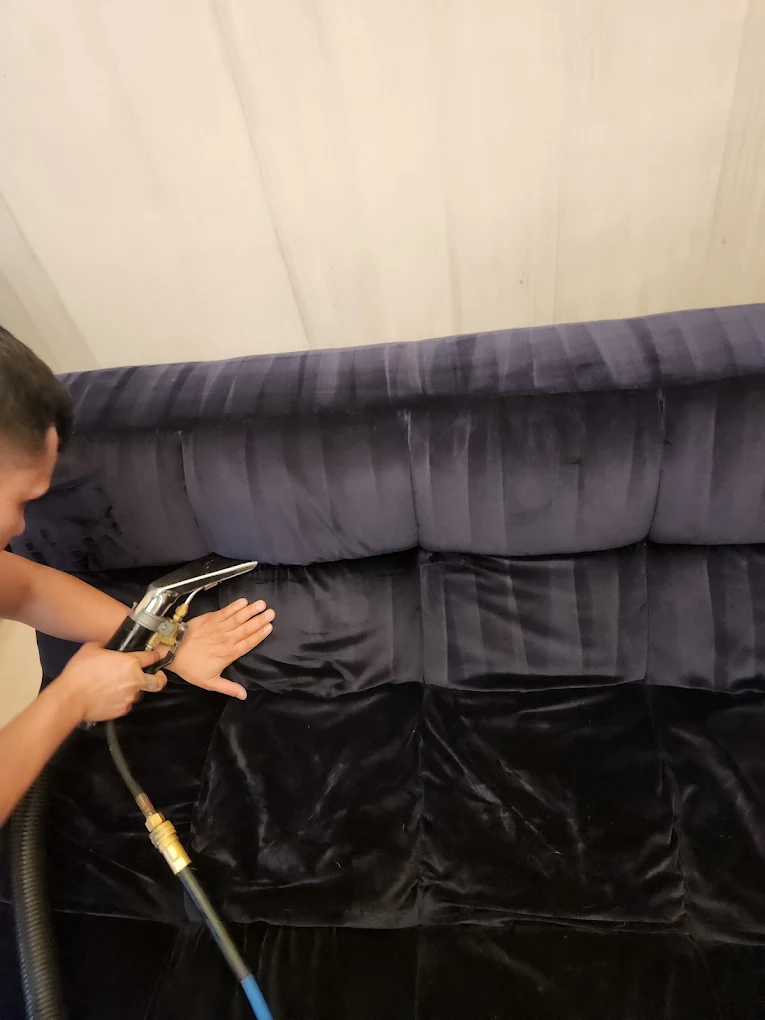
What about leather? Leather does not use these codes in the same way, and it needs its own care. It gets a pH-balanced cleaner and a conditioner afterward. We do not use steam on leather. See leather furniture cleaning if your sofa is leather or faux leather.
6 home cleaning mistakes that ruin sofas
These are the moves that cause the most trouble.
For general stain basics on carpet and rugs, our DIY carpet stain removal tips explain blotting, rinsing and the products to avoid. On a sofa, always check the code before you use anything from that list.
How to spot-clean a sofa safely by code
If something spills, act fast but stay gentle. These steps work for most fresh spills, and they change slightly depending on the code.
- Blot right away. Press a clean white towel on the spill. Do not rub. Turn the towel to a dry part and keep pressing until almost nothing comes up.
- Lift any solids. Use a spoon or a dull knife to lift food off the surface before you add anything.
- Check the code. Look at the tag before you reach for a cleaner. This step takes ten seconds and saves the sofa.
- For W fabrics: lightly dampen a white cloth with cool water and a small drop of clear dish soap. Dab the spot, then dab again with a cloth dampened in plain water to rinse. Blot dry.
- For S fabrics: do not use water. Blot only, or use a solvent cleaner made for S-code upholstery, following its label and with the windows open. Test it on a hidden spot first.
- For W/S fabrics: start with the gentlest method. A little cool water on a cloth is usually enough for a fresh spill.
- For X fabrics: blot only. Once dry, vacuum lightly with a soft brush. Then call a professional for anything more.
- Feather the edge. On W and W/S fabrics, dab outward from the spot with a barely damp cloth so there is no sharp line between the cleaned area and the rest.
- Dry it with air. Point a fan at the spot. Keep pets and people off it until it is fully dry.
Always test first: dab your cleaner on a hidden area, such as the back of a skirt or under a cushion. Wait for it to dry completely. If the color changes, a ring forms or the fabric feels different, stop and call a pro.
Pet accidents are a special case. Urine can soak through the fabric into the foam, and the smell can come back on humid days. Read why pet urine smell comes back to understand what is happening, and ask about our pet stain and odor treatment when you book.
What to do if there is no tag
Tags get cut off, fade, or were never there on older, custom or reupholstered pieces. Antique and hand-me-down sofas often have no label at all. If you cannot find a code, here is the safe way to think about it.
- Treat it as delicate. Assume it is an S or an X until you know more. That means no water, and no strong cleaners.
- Check with the maker or store. If you know the brand, the store or the maker can often tell you the code from the model or fabric name.
- Look at the fabric. Very soft, matte microfiber, a crisp linen look, or a sheen like silk all suggest a more delicate code.
- Ask for a professional test. A trained cleaner can spot-test a hidden area and tell you which method the fabric can handle.
If a chair or sofa was recovered, the old tag may be wrong. Ask the upholsterer for the new fabric's code.
How our crews clean each code
A professional upholstery clean is not one method used on everything. It is a process that starts with the fabric and builds the clean around it. Here is how our crews work on every sofa.
Code check and spot test
We read the code, look at the fiber and test a hidden area before anything else touches the fabric.
Vacuum and pre-treat
Crevices and the deck are vacuumed. Arms, headrests and seat fronts are pre-treated where body oils build up.
Clean matched to fabric
Steam or dry solvent, chosen by the code. The whole piece is cleaned so it dries evenly, not just the stains.
Groom and dry
The fabric is groomed so it dries soft. Most sofas take about an hour and are dry in 2 to 6 hours.
Cleaning only the stained areas leaves a water line where the clean part stops, so we clean the full sofa. Removable cushion covers are cleaned on the frame. We never put them in a washing machine, which can shrink them and make them impossible to zip back on.
Keep your sofa clean between cleanings
Good daily habits keep any sofa looking better for longer, no matter what the code says. These are the ones that make the biggest difference.
- Vacuum the sofa every week or two with a soft brush, including the crevices and under the cushions.
- Put a washable throw over the arms and the headrest area, where hands and hair oils build up first.
- Keep the sofa out of strong, direct sun, or close the blinds in the brightest part of the day.
- Blot spills right away, before they soak into the foam.
- Run AC or a dehumidifier in a damp basement so the sofa does not hold a musty smell.
- Book a professional clean before the arms and seat fronts turn dark, not after.
Our article on how to keep an upholstered sofa clean has more ideas for families and pet owners.
Chairs, sectionals and other pieces
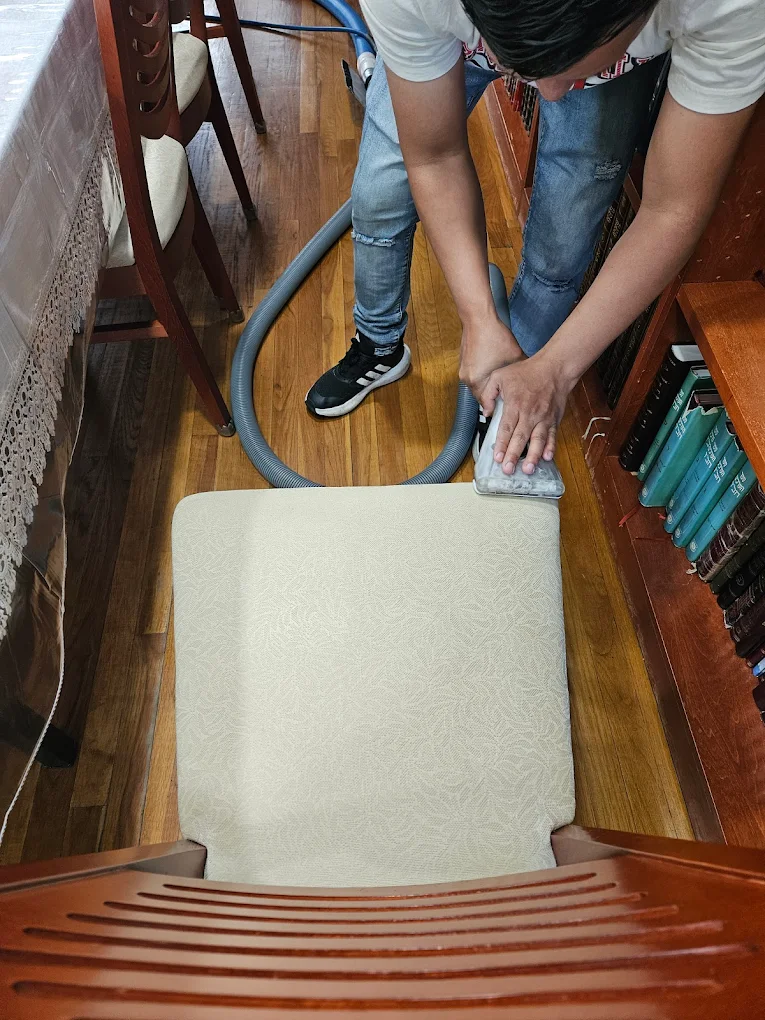
The same codes appear on far more than sofas. Dining chairs, recliners, ottomans, headboards, chaises and office chairs all carry them. Fabric dining chairs are one of the most common requests on Long Island, especially before the holidays, and the seats take a lot of food and drink. Our seat cushion cleaning service cleans chair seats in place.
Sectionals often mix more than one fabric, such as a woven body with a velvet accent or a leather trim. Each part gets the method its fabric needs. For big sectionals and family sofas, see our couch cleaning page.
Many families have the carpet under the sofa done on the same visit. Our carpet cleaning page explains what a full room clean includes. For tough spots like ink, wine or coffee that you have already tried at home, see stain removal.
What upholstery cleaning costs
Upholstery cleaning starts at $119. A standard sofa, a large sectional and a set of dining chairs are priced differently, so tell us the pieces or send a photo and we will quote before we start. Booking online takes $20 off any service, and the price is always confirmed before any work begins. For a full look at what changes the price, read how much it costs to get a couch professionally cleaned.
Guests on the way, or a spill you need handled fast? We are open 24 hours, 7 days a week, so call any time.
Around Long Island
We clean sofas, chairs and sectionals in homes all over Nassau and Suffolk from our shop in Deer Park. That includes towns like Glen Cove, Floral Park, Bethpage, Farmingdale, Dix Hills and East Northport. See every town on our service areas page, or learn more about Long Island carpet cleaning from our team. Wherever you live, the first step is the same: find the tag, read the letter, and let it guide how the sofa is cleaned.
Not sure what your sofa can take? We check the code, test a hidden spot and clean with the method your fabric calls for. The price is confirmed before we start, and booking online takes $20 off.
Call (516) 708-0278 Book online, save $20