
Short answer: road salt stains are dried salt crystals and ice-melt film left behind when slush melts into your carpet. Vacuum the dry salt first, then dissolve what is left with a mild mix of white vinegar and warm water, blot it out and rinse with plain water. If white lines keep coming back after the carpet dries, the salt has soaked into the backing and needs hot water extraction to flush it out.
Every Long Island winter ends the same way in a lot of homes. The snow is gone, but there is a white, chalky line across the carpet just inside the front door, a crusty patch at the bottom of the stairs and a gray, gritty path down the hall. You vacuum, and it is still there. You scrub, and it turns into a dark spot. This guide comes from the crews who do carpet stain removal on Long Island all winter long, and it explains why salt stains act so differently from food or drink spills.
You will learn what is really in the slush on your boots, how to tell salt from other stains, the home fixes that make it worse, a safe step-by-step method you can try today, and when it is time to call a professional. We will also cover area rugs, stair runners and the entry mats that do most of the work keeping salt off your floors.
What road salt does to carpet
Salt does not stain carpet the way coffee or wine does. It does not dye the fiber. Instead it leaves solid crystals and a thin film on and around every strand. That causes three different problems.
- White marks and crust. When slush melts into the carpet, the water dries but the salt stays. It forms white lines, rings and a stiff, crunchy feel, often at the edge of where the wet boot sat.
- Wear on the fibers. Salt crystals and the sand mixed in with them are sharp. Every step grinds them against the base of the fibers, so the pile in entries and on stairs gets dull and fuzzy faster than in other rooms.
- Dampness and dirt. Some ice melts pull moisture out of the air. A salty spot can stay slightly damp for weeks, and damp spots grab dirt from every shoe, so the area turns gray and then dark.
That last point is why so many salt stains seem to get worse after you clean them. The water you add dissolves some salt but spreads the rest into a wider ring, and the ring keeps drawing in soil.
What is really in the slush on your boots
Town and county roads, parking lots, sidewalks and driveways are all treated differently, so the slush that comes in on your boots is a mix. Each part leaves its own kind of mark, from the top of the carpet down.
Plain rock salt usually shows up as a white, powdery mark. Many of the pellet ice melts sold for steps and walkways leave something different: a dark, slightly greasy-looking spot that never seems to dry. People often think it is an oil stain. In most homes it is ice melt that keeps pulling moisture from the air.
Why salt is a big problem on Long Island
Long Island winters swing between snow, sleet, rain and thaw, sometimes in the same week. Every freeze brings a new round of salt on the roads and sidewalks, and every thaw turns it into slush. That means salt gets tracked in again and again from December into March, not just after one big storm.
Many homes here have the carpet right where the salt comes in. Older capes and split-levels often have carpeted stairs a few steps from the front door. Lots of families come in through the garage, straight from a salted driveway onto a carpeted landing or a finished basement. Commuters walk across salted station platforms and parking lots and bring it home on their shoes. Homes near the water get the wet, heavy storms that leave the most slush behind.
The heat runs all winter, so the air inside is dry and salt crystals form fast. Then spring brings humid days, and any ice-melt residue still in the carpet softens and turns sticky again. That is why some homeowners first notice the damage in April, long after the last snow.
Tip from our crews: if a spot near the door looks dark and damp even though nothing was spilled there, press a white paper towel on it. If the towel comes up slightly wet and gritty, you are almost always looking at ice melt, not a spill.
How to tell a salt stain from other stains
Treating the wrong stain the wrong way is how small marks become permanent. Here is how to know you are dealing with salt.
- Where it is. Salt marks show up in a line or a fan shape inside doors, on the bottom steps, along the path from the garage and under the spot where boots are left to dry.
- What color it is. Fresh rock salt is white or light gray. Old salt that has caught dirt is gray or brown, often with a white edge.
- How it feels. Run your hand over it. Salt feels stiff, crunchy or gritty. Ice-melt film can feel slightly tacky or cool and damp.
- When it showed up. If the mark appeared after a storm or a thaw, and nothing was spilled, salt is the most likely cause.
If the mark is in the middle of a room, has a sharp edge and a color like brown, red or yellow, it is more likely a food, drink or pet stain. Those need a different approach. Our DIY carpet stain removal tips cover the most common ones.
7 home fixes that make salt stains worse
It makes sense to grab the nearest cleaner when you see a white mark. But these common moves spread salt deeper or leave something behind that is harder to remove than the salt.
The good news is that salt is one of the stains that responds best to the right treatment, because it dissolves in water. The goal is to dissolve it and take it all out, not to push it around.
How to remove salt stains from carpet, step by step
This method works well on light to medium salt marks on most synthetic wall-to-wall carpet. Test any solution on a hidden spot first, like inside a closet, and wait for it to dry before you go further.
- Let it dry completely. Wet slush is hard to clean. Once it dries, the salt sits on top as crystals you can lift out.
- Vacuum slowly. Go over the area in several directions with a good vacuum. Use the hose with a crevice tool along the edge of the stairs and the door. Get out all the loose salt and sand you can.
- Mix a mild solution. Combine one part white vinegar with two parts warm water in a spray bottle. The mild acid helps dissolve salt film.
- Mist, do not soak. Lightly spray the stain so the top of the fibers is damp. Wait a few minutes for the salt to dissolve.
- Blot from the outside in. Press a clean white towel on the spot. Stand on it to pull up the liquid. Change to a dry part of the towel and repeat.
- Rinse with plain water. Mist with clean warm water and blot again. This takes out the vinegar and any salt still in solution.
- Dry it fast. Put a fan on the spot or run the heat. A spot that dries quickly is less likely to wick salt back up from below.
- Check it the next day. If a faint white edge comes back, repeat the mist, blot and rinse once more. If it keeps coming back, the salt is deeper than home cleaning can reach.
For the slick, damp spots left by ice melt, the same method helps, but those often need more than one round, because the film is spread through more of the pile. Between cleanings, our guide on caring for your carpets between professional cleanings has simple habits that keep entry areas in better shape.
About stairs: salt collects on the front edge of each step, where the toe lands. Clean stairs from the top down, one step at a time, so drips do not run onto steps you have already done.
Home cleaning vs. professional extraction
Here is an honest look at what each option does with salt in carpet.
| Vacuum only | Vinegar and blotting | Hot water extraction | |
|---|---|---|---|
| Lifts dry crystals and sand | Most of what is on top | Some | Yes, after a full vacuum and pre-treatment |
| Dissolves salt film | No | On the surface | Yes, through the full pile |
| Reaches the backing | No | Rarely | Yes, with strong suction |
| Leaves residue | No | Little, if rinsed well | No, carpet is rinsed |
| Usual result | White haze remains | Light marks fade, deep ones return | Salt and grit flushed out in most homes |
Hot water extraction works so well on salt because salt dissolves in warm water and the machine pulls the water straight back out. Our page on steam carpet cleaning explains the method in more detail.
How our crews remove salt and slush stains
A professional salt treatment is not just a stronger shampoo. It is a process that removes the dry grit first, dissolves the salt, and then rinses everything out of the carpet.
Identify the stain
We check whether it is salt, ice melt, mud or a spill, and tell you honestly what should come out and what may only lighten.
Dry soil removal
A slow, thorough vacuum pulls out crystals and sand before any water touches the carpet.
Stain-specific treatment
The salty areas get a treatment made to break down salt and ice-melt film, with time to work.
Extract and rinse
Hot water extraction flushes the salt out, and a residue-free rinse leaves nothing sticky behind.
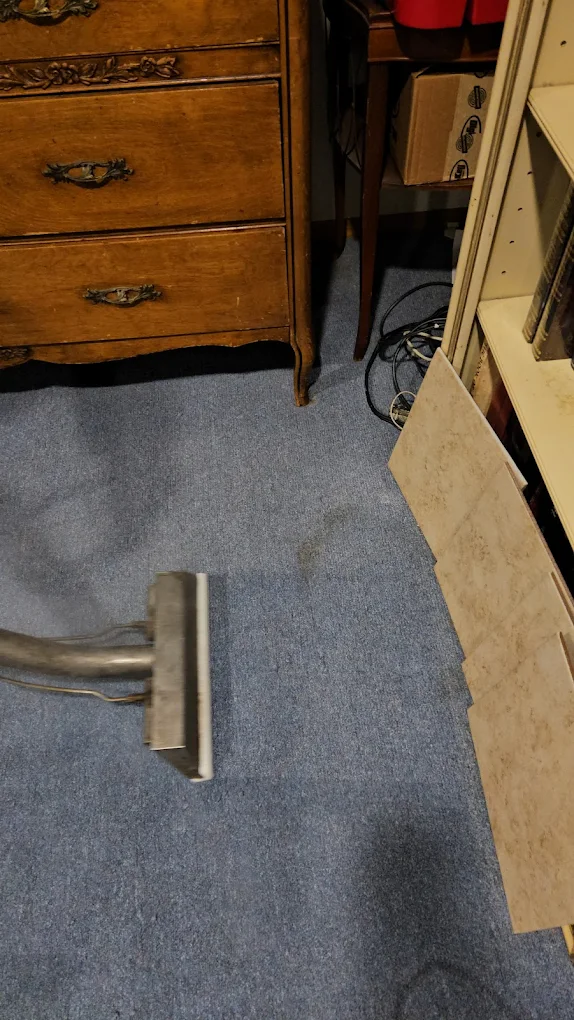
If a salty spot keeps wicking back after it dries, we extract from deeper in the carpet to stop it. Spot treatment is included with every carpet cleaning, so the entry, hall and stairs can be done as part of a normal carpet cleaning visit. Heavy or specialty stains may cost extra, and you will know before we start.
Many families book an end-of-winter cleaning for the whole house once the salt season is over. If that is your plan, our residential carpet cleaning page explains what a full-home visit covers.
Area rugs, runners and stairs
Entry rugs and runners take more salt than any carpet in the house, because they sit right where boots land. A small synthetic mat can often be shaken out and rinsed at home. A larger rug in the front hall or a long hall runner holds salt deep in its base, and it is usually best cleaned properly once the season ends. See our area rug cleaning page for the options.
Wool and hand-knotted rugs need more care. Salt can stiffen wool, and the wrong cleaner can make some dyes bleed. If your rug is wool, Persian or handmade, do not try vinegar on it at home before you read about our rug cleaning service, where rugs are checked before they are washed. For oriental and Persian rugs in particular, see oriental rug cleaning.

Carpeted stairs show salt damage first, on the front edge of the bottom few steps. They are cleaned by hand, one step at a time, so tell us how many steps you have when you book.
Thinking ahead? Some homeowners roll up their best rug for the worst weeks of winter and put a washable mat in its place. Our guide to area rug cleaning before winter explains why a clean rug handles the season better.
How to keep salt off your carpet this winter
You cannot stop the town from salting the roads, but you can stop most of that salt at the door.
- Put a rough, scraping mat outside every door you use, and a thick absorbent mat just inside.
- Set up a boot tray by each door, and make shoes-off the rule from December to March.
- Shake out and rinse the mats every week or two during salt season. A full mat stops working.
- Vacuum entry areas, halls and stairs more often in winter, even when they look clean.
- Wipe your pets' paws when they come in from salted sidewalks. Salt on paws ends up on your carpet.
- Use ice melt sparingly on your own steps and walk, and sweep up the extra once the ice is gone.
- Keep a spray bottle and white towels near the door so you can blot new slush the same day.
- Do not leave wet boots or umbrellas on carpet. Put them on a tray or on a hard floor.
Not sure when to book a deep clean? Our article on the best season to schedule carpet cleaning explains why right after the winter is one of the best times of year.
What salt stain removal costs
Normal spot treatment, including salt, is included with every carpet and upholstery cleaning. Heavy or specialty stains may be extra, and you will know the price before we start. Our carpet cleaning starts at $119 for one room of any size, and booking online takes $20 off any service. For a full breakdown of what changes the price, read how much carpet cleaning costs on Long Island.
If the salt season also left a mess on hard floors, the dark lines in your entry and kitchen grout can be done on the same visit with tile and grout cleaning. And if a pet tracked in more than salt this winter, ask about our pet stain and odor treatment too. Need it done fast before guests or a showing? We are open 24 hours, 7 days a week, so ask about same-day carpet cleaning.
Around Long Island
We remove winter salt stains in homes across Nassau and Suffolk from our shop in Deer Park. That includes towns like Long Beach, Oceanside, Garden City, Huntington, Bay Shore, Port Jefferson and Riverhead. Wherever you live, the plan is the same: vacuum the salt dry, dissolve and rinse what is left, and stop the next round at the door. Learn more about Long Island carpet cleaning from our team.
White salt lines that will not go away? We identify the stain, dissolve the salt and rinse it out of the carpet. The price is confirmed before we start, and booking online takes $20 off.
Call (516) 708-0278 Book online, save $20