
Short answer: if your dog or cat sleeps on the couch, the fabric collects hair, dander, body oil, drool and the odd accident much faster than a couch in a pet-free home. Vacuum it often, use a washable throw on the favorite spot, and treat accidents the same day. Plan a professional cleaning about every 6 months, with an enzyme treatment for any urine, so the smell never settles into the cushions.
On a lot of Long Island streets, the couch is the dog's bed for half the day and the cat's lookout for the other half. That is part of having pets, and nobody wants to stop it. But it means the couch needs different care than a couch in a house without animals. Our page on couch cleaning on Long Island explains how we clean every kind of couch. This guide is about the problems pets add, and what you can do about them before and after we come.
What pets leave in a couch
Most of what a pet leaves behind is not visible from across the room. You notice it when you sit down, when the heat comes on in the fall, or when a guest picks a different seat.
- Hair. Short dog hair works into the weave like small needles. Long hair collects at the seams and under the cushions.
- Dander and skin oil. A dog that sleeps in the same corner every day leaves a dark, slightly greasy patch on the cushion and the arm. It also holds smell.
- Drool and paw prints. Dogs who rest their heads on the arm leave a dull ring. Paws carry mud, lawn and, in winter, road salt from the sidewalk.
- Accidents. Urine and vomit soak through the fabric into the cushion foam, where a surface wipe cannot reach.
- Scratching and kneading. Cats pull loops on the sides and back, and kneading pushes oil and hair deeper into the fabric.
The same things happen to your carpet and rugs, which is why many pet owners book the couch and floors together. Our main page on carpet cleaning Long Island explains how we handle the floors in the same visit.
Why the couch smells even when it looks clean
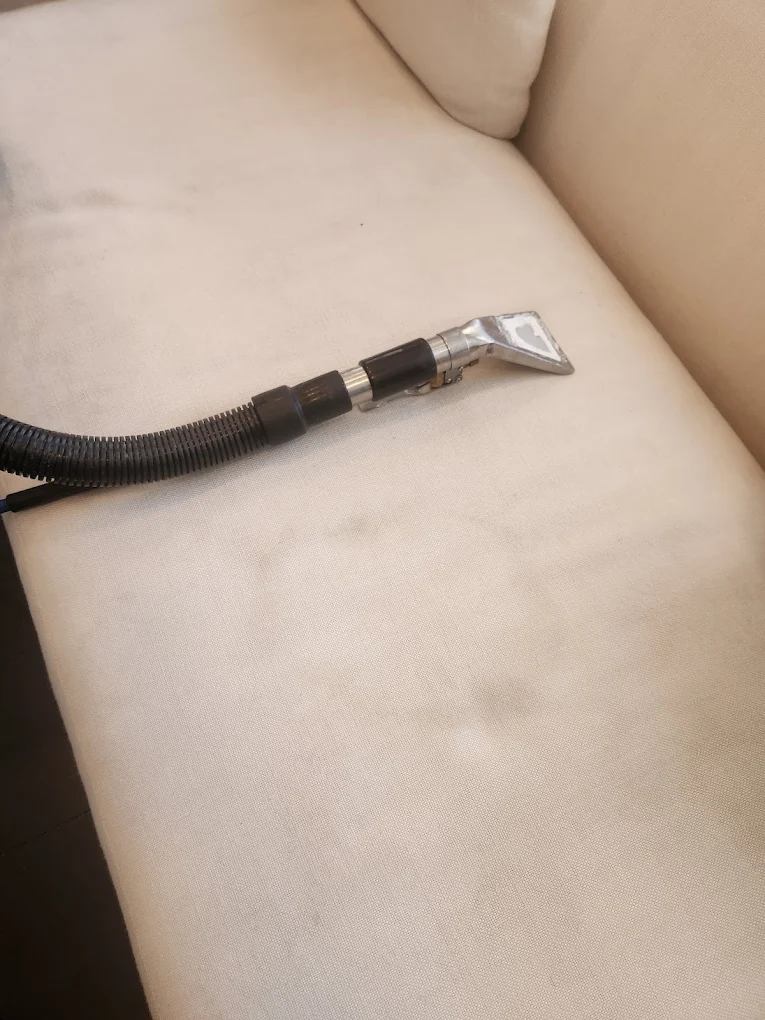
Pet smell in a couch usually has two sources. The first is the oily layer from fur and skin that builds up where your pet sleeps. It smells a little like a wet dog on a humid day, and it gets stronger when the air is warm. On Long Island that means August and, again, the first weeks the furnace runs in the fall.
The second source is urine. When a dog or cat has an accident on the couch, the liquid goes through the fabric into the foam. It dries there, and the salts it leaves behind pull moisture out of the air, so the smell keeps coming back. Our guide on why pet urine smell comes back explains this for carpet, and the same thing happens inside a cushion.
Air fresheners and fabric sprays only add perfume on top. A pet that smells urine in a spot is also more likely to go there again, so covering the smell for people does not solve it for the animal.
Tip from our crews: lift every seat cushion once a month. Most of the hair, crumbs and dried mud on a pet owner's couch is under the cushions, on the deck and in the back corners. A quick vacuum there does more than an hour of brushing the top.
What to do at home, week to week
A few habits keep a pet couch fresh between cleanings:
- Vacuum twice a week with the upholstery tool, going against the nap to lift hair out of the weave. A rubber glove or rubber brush pulls up short dog hair the vacuum misses.
- Put a washable throw on the favorite spot. Wash the throw, not the couch. It is the cheapest way to keep body oil off the fabric.
- Wipe paws after walks, especially in mud season and after salted sidewalks in winter.
- Treat accidents the same day. Blot with paper towels, pressing hard, until no more moisture comes up. Do not scrub, and do not pour water on it.
- Check the cleaning code first. Before you use any product, look at the tag under the cushion. Our article on sofa fabric codes W, S, W/S and X explains what each letter allows.
Microfiber is popular with dog owners because hair brushes off it easily, but it often leaves rings when you clean a spot with water. If that has happened, read our guide on water rings on a microfiber couch before trying again.
Couch smells like the dog? Tell us the size of the couch, the fabric and where your pet sleeps or had accidents. We treat pet odor during the visit and confirm the price before we start. Booking online takes $20 off.
Call (516) 708-0278 Book online, save $20Pet owner mistakes we see
Fabrics and covers that work with pets
No couch fabric is pet-proof, but some hold up better. Tight weaves and smooth fabrics let hair sit on top instead of working in. Loose, loopy weaves catch cat claws. Velvet and chenille show every paw print. Leather does not hold hair, but claws mark it and oils darken it, and it needs its own care; our page on leather furniture cleaning explains how we clean and condition it.
| Problem | What helps at home | What a pro visit adds |
|---|---|---|
| Hair in the weave | Rubber brush, twice-weekly vacuum | Deep vacuum and rinse that releases embedded hair |
| Dark spot where the dog sleeps | Washable throw on that spot | Pre-treatment for body oil, then full cleaning |
| Fresh urine | Blot hard, no water, no scrubbing | Enzyme treatment aimed at the foam |
| Old urine smell | Not much; sprays only mask it | Enzyme treatment, cleaning and rinse; we say first if foam is too far gone |
| Muddy or salty paw prints | Let mud dry, then vacuum | Rinse that removes salt and soil residue |
Dark arms and headrests are a slightly different problem, caused mostly by people rather than pets. Our article on why sofa arms and headrests turn dark covers that.
How we clean a pet owner's couch

Every pet owner's couch gets the same careful routine. We start by asking where your pet sleeps and where any accidents happened, because that changes how we treat the couch. Then we check the fabric tag and test a hidden spot before anything touches the fabric.
We take the cushions off, vacuum the deck, the seams and the back corners, and pre-treat the oily spots, drool rings and paw marks. Urine areas get an enzyme treatment aimed at the foam. Then the whole couch is cleaned, not just the spots, so it dries one even color. Sectionals are done piece by piece. Most couches are dry in 2 to 6 hours.
Ask and inspect
Where the pet sleeps, where accidents happened, the fabric code and a spot test.
Remove hair
Cushions off, deep vacuum of the deck, seams, corners and arms.
Treat
Pre-treatment for oil and soil, enzyme treatment for urine areas.
Clean and groom
The full couch is cleaned and groomed so it dries even.
Real jobs from our own schedule: this November our crews cleaned two loveseats in Deer Park and an L-shaped sectional in Holtsville, and in Greenport they treated cat urine in a home's carpet. Pet odor and couch work go together on many of our visits.
The same treatment works on other pieces your pet uses. Our pet stain and odor cleaning covers carpet, rugs and furniture, and if the cat sleeps on your bed, our mattress cleaning page explains how a mattress is cleaned and dried. For other furniture, see our upholstery cleaning page, and for what goes into a couch price, see how much couch cleaning costs on Long Island.
Wondering whether the cleaning products are safe around your animals? Our article can carpet cleaning be harmful to my dog? answers the usual questions, and our pet owner's guide to clean carpet covers the floors.
- Couch cleaning starts at $119
- Pet odor treatment where needed, price confirmed before we start
- $20 off when you book online, open 24 hours, 7 days
Pet-friendly couch cleaning around Long Island
Our crews clean couches for dog and cat owners all over Nassau and Suffolk, in towns like Deer Park, Massapequa, Levittown, Oceanside, East Northport, West Islip, Patchogue and Holtsville. Every town we cover is on our service areas page, and you can read more about Long Island carpet cleaning on our home page.
Ready for a fresh couch your pet can still enjoy? Couch cleaning starts at $119, the price is confirmed before we start, and booking online takes $20 off. We answer 24/7.
Call (516) 708-0278 Book online, save $20