
Short answer: the ring is not really a water stain. When a wet spot dries, the water travels to its edge and drops the dirt, body oil and old soap it picked up along the way. Many microfiber couches are also coded S, which means water is the wrong cleaner in the first place. Read the tag, blot instead of rubbing, clean the whole cushion evenly, and brush the nap as it dries.
It is one of the most frustrating things that can happen to a family couch. Someone spills a little water or juice, you clean it right away, and the next morning there is a bigger, darker outline where the spill was. You did everything right, and it looks worse. Our microfiber couch cleaners on Long Island get this question more than any other about microfiber, so here is the plain explanation and the fix.
What microfiber is, and why it shows marks
Microfiber is a fabric made from very fine synthetic fibers, usually polyester. The fibers are packed tight and brushed, which gives the soft, suede-like feel people like. That tight surface is also why a spill often beads up for a moment before it sinks in.
The brushed fibers all lean one way. This is called the nap. When one area gets wet and dries flat, or gets rubbed with a towel, the fibers there lean a different way and reflect light differently. So some "stains" on microfiber are not stains at all. They are crushed nap, and a soft brush fixes them.
Why the ring forms
A water ring forms the same way every time:
- The spot gets wet. A drink, a pet accident or a cleaning spray soaks the fabric and the foam under it.
- The water picks up old soil. Body oil, dust, old cleaner and minerals from tap water dissolve into it.
- The edge dries last. As the spot dries from the outside in, the water keeps moving to the edge and leaves everything it carried in a line.
That is why a couch can look evenly used for years and never show a ring until someone cleans one spot. The soil was spread out before. The water simply gathered it into a line you can see.
Tip from our crews: look at the middle of the ring. If the middle looks cleaner than the rest of the cushion and the outline is dark, it is moved soil. It almost always comes out when the whole cushion is cleaned the same way.
Read the tag before anything touches the fabric
Lift the seat cushions or look along the deck of the couch for the care tag. It carries a one-letter code. Our full guide to sofa fabric cleaning codes explains each one in detail. For microfiber, this is what matters:
- S means solvent only. Many microfiber couches carry this code, and plain water is the most common cause of rings on them.
- W means water-based cleaners are fine.
- W/S means either, used with care.
- X means vacuum only. Leave everything else to a professional.
No tag? Treat the couch as an S code and keep water off it.
Six habits that make rings bigger
What to do at home, step by step
When something spills, speed helps, but being gentle helps more.
- Blot with a clean, dry white towel. Press down, do not rub.
- Check the tag before you put anything on the fabric.
- On an S or W/S code, a little rubbing alcohol on a white cloth is a common home method. Test it on a hidden spot first and let it dry fully.
- Dab lightly and feather it out across the whole panel, so there is no edge where the damp area stops.
- When it is dry, brush the area with a soft, clean brush, first in small circles and then in one direction, so the nap stands up evenly.
- If the ring is still there, stop. More products usually make the ring bigger, not smaller.
Spills on carpet and rugs are a different story. Our DIY stain removal tips cover those, but most of those steps use water, so keep them away from an S-coded couch.
Spot cleaning vs. a full professional clean
| Water on one spot | Careful home care | Professional clean | |
|---|---|---|---|
| Chance of a new ring | High | Medium | Low, the whole panel is cleaned evenly |
| Dark arms and headrests | No change | Partly lighter | Pre-treated and cleaned |
| Matches the fabric code | Often not | If the tag is read | Yes, checked and tested first |
| Nap even when dry | Rarely | Sometimes | Yes, brushed while it dries |
How our crews clean a microfiber couch
Read and test
We check the code and test a hidden spot, so the method fits the fabric.
Hair and crumbs out
Pet hair and debris come out first, so nothing mats into the fabric.
Pre-treat, then clean
Arms, seats and headrests are pre-treated, then every section is cleaned the same way.
Brush the nap
Each section is brushed in one direction so it dries even and matches.
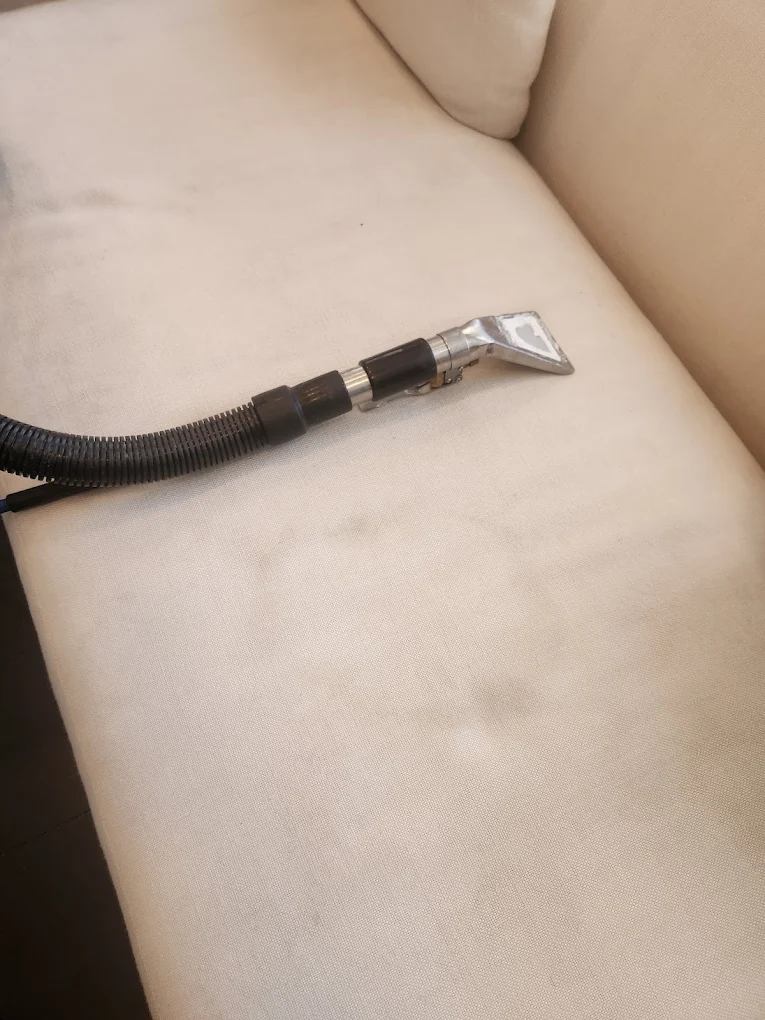
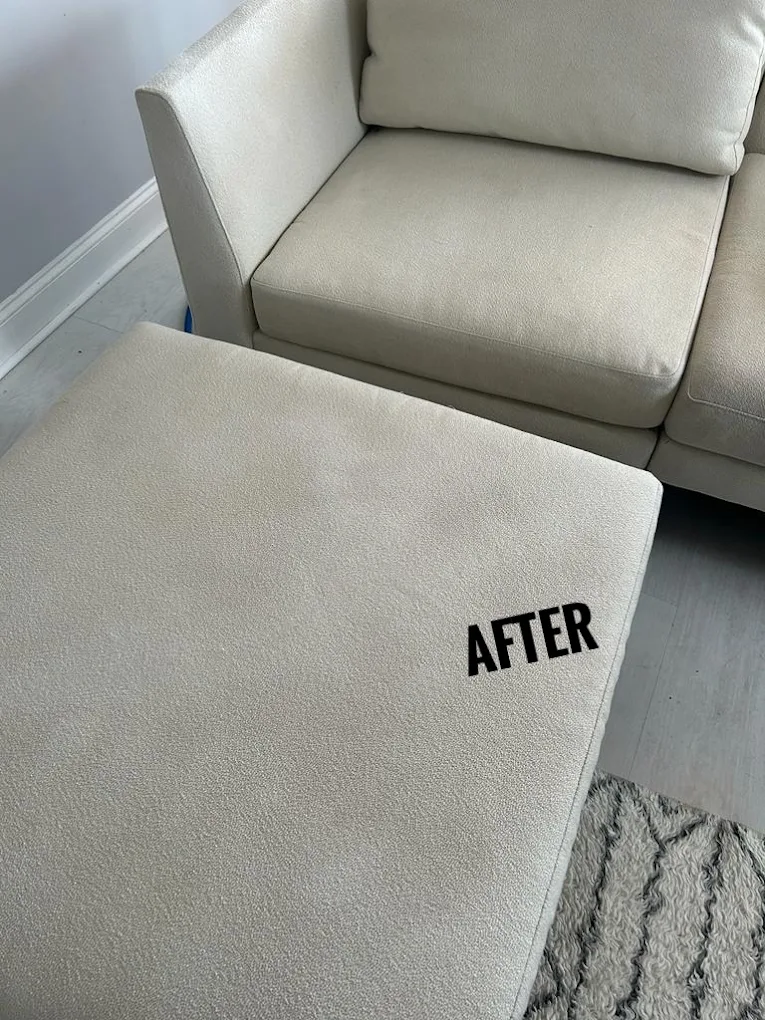
Couches are a big part of our week. This October, for example, our crews cleaned a sectional in Seaford and a sofa with a matching loveseat in Lloyd Harbor. On every couch the order is the same: hair out, arms and seats pre-treated, then each section cleaned evenly so nothing dries with an edge. If a pet has had accidents on the cushions, an enzyme from our pet stain and odor removal service goes on before the cleaning.
Long Island seasons and microfiber
Summer here is humid. In a finished basement or a den without AC, a damp spot dries slowly, and slow drying gives the water more time to pull soil to the edge. Whenever fabric is drying, run the AC, a fan or a dehumidifier.
Winter brings the opposite problem. The heat runs for months, windows stay shut, and everyone spends more time on the couch. Body oil builds up on the arms and headrests and turns them darker than the seats. It is easier to clean the arms before they turn dark than to fix them later, and our upholstered sofa care tips help between visits.
What it costs
Microfiber couch cleaning starts at $119 and is priced by size, from a loveseat to a large sectional. You get the price before we start, and booking online takes $20 off. Our guide on what couch cleaning costs on Long Island explains what changes the price.
Other pieces can go on the same visit. Ask about microfiber upholstery cleaning for chairs and ottomans, couch cleaning for other sofas in the house, and fabric upholstery cleaning for everything else. If the carpet under the couch needs help too, see our carpet cleaning Long Island page. Guests coming tomorrow? Ask about same-day service.
Around Long Island
Our crews clean microfiber couches all over Nassau and Suffolk from our shop in Deer Park, in towns like Seaford, Wantagh, Bethpage, Oceanside, Lindenhurst, East Northport and Hauppauge. See every town on our service areas page, or read more about Long Island carpet cleaning.
Rings on your microfiber couch? We read the code, clean the whole couch evenly and brush the nap so it dries even. The price is confirmed before we start, and booking online takes $20 off.
Call (516) 708-0278 Book online, save $20