
Short answer: the dark patches on sofa arms, headrests and seat fronts are mostly body oil, hand lotion and hair products that soak into the fabric and then trap everyday dust. Water alone will not lift oil, and scrubbing with soap often spreads it into a bigger ring. Vacuum, blot, check the fabric code, and let a professional upholstery cleaning break down the oil and rinse it out evenly.
Almost every fabric sofa ages the same way: the arms turn gray, the top of the back gets a shadow, and the front edge of the seat looks dull. It usually comes clean. This guide explains what that dark film is, what not to do, and how fabric upholstery cleaning on Long Island handles it without shrinking, browning or crushing the fabric.
What that dark film really is
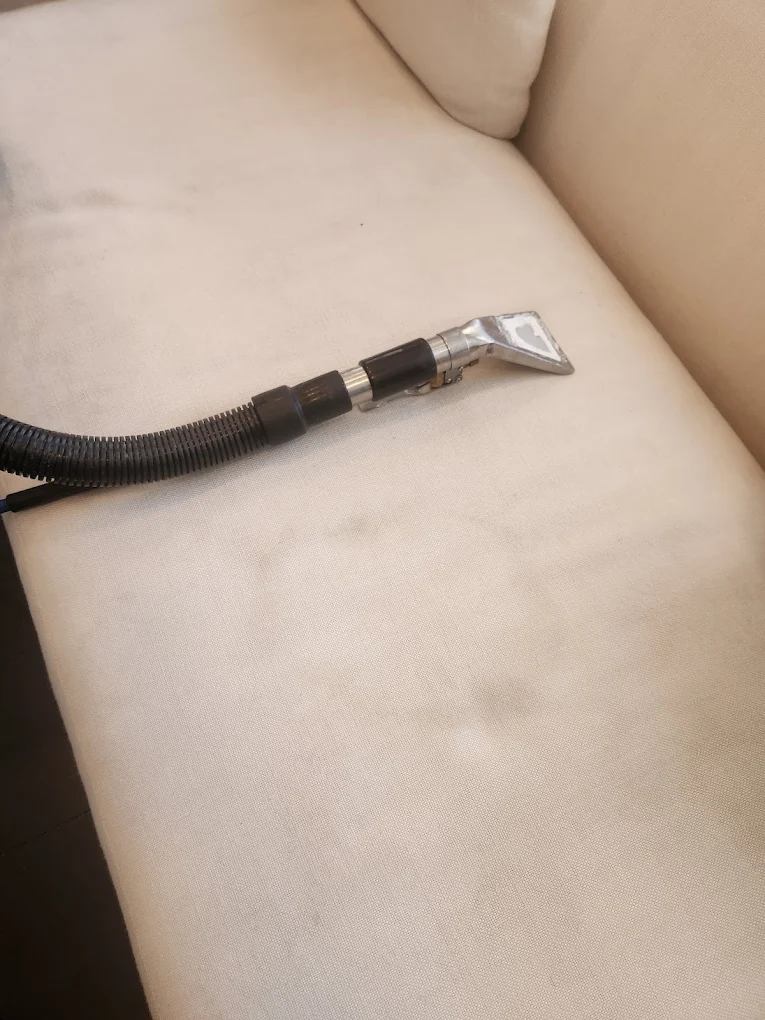
It is not just dirt. Skin makes a thin layer of natural oil all day long. Every time you rest an arm on the sofa, lean back, or sit with your feet up, a little of that oil moves into the fabric. Hand cream, sunscreen, hair gel, conditioner and makeup add to it.
Oil on its own is almost clear, but oily fabric is slightly sticky. Dust, pet dander and kitchen grease cling to it and stay. Over months the patch turns gray, then almost brown, with soft edges that match exactly where people touch.
Where it shows up first
When our crews walk up to a sofa, these are the places they check before anything else:
- The tops and fronts of both arms, where hands and elbows rest.
- The top of the back cushions, where heads and hair touch.
- The front edge of the seat cushions, where legs and hands push up to stand.
- The cushion of the "favorite seat," which is often darker than the rest of the sofa.
- Any spot where a dog or cat likes to lie or rub.
Why it builds up faster in a Long Island winter
From November to March, life on Long Island moves indoors. Windows stay shut, the heat runs, and the living room sofa becomes the place for football, movies and naps. More hours on the couch means more contact with the same few spots.
Winter also means more hand cream for dry skin and pets who spend less time outside. Cleaning before the arms get very dark gives the best result.
Tip from our crews: look at the underside of a seat cushion or the back of the sofa that faces the wall. That is the true color of your fabric. Comparing it with the arm shows you how much is soil and how much is the fabric itself.
How the soil builds, layer by layer
A dark arm is usually several kinds of soil stacked on top of each other. Each one needs its own step to come out:
Treat only the top layer and the patch comes back within weeks. The order of the steps matters as much as the products.
Home fixes that make it worse
The hardest arms to clean are often ones that were "cleaned" at home first:
Not sure what your tag means? Our guide to sofa fabric codes W, S, W/S and X explains each one in plain words.
What you can safely do at home
You cannot reverse years of oil at home, but you can slow it down:
- Vacuum the arms and back every week with the upholstery brush. It lifts the dry layer before it sticks.
- Blot fresh spills right away with a white cloth. Press, do not rub.
- Check the cleaning code under a seat cushion or on the deck tag before you try any product.
- Test anything in a hidden area first, like the back near the floor, and let it dry fully before you judge it.
- Use arm covers or a throw on the favorite seat, and wash them often.
Our article on how to keep an upholstered sofa clean has a full weekly and monthly routine.
Your fabric changes the method
Two sofas with the same dark arms can need very different cleaning:
| Fabric | Main risk | What goes wrong at home | How we clean it |
|---|---|---|---|
| Cotton and linen | Shrinking and browning | Too wet, dries with yellow or brown edges | Low moisture and fast drying |
| Velvet and chenille | Crushed or matted pile | Scrubbing leaves flat, shiny patches | Cleaned, then brushed in one direction |
| Rayon and viscose blends | Water spots | Any water leaves rings | Usually a dry solvent |
| Microfiber | Water rings | Tap water leaves marks around the spot | Method matched to the tag code |
| Polyester and olefin | Soap left behind | Sticky residue that soils again | Can take a full hot water rinse |
Microfiber gets its own guide: water rings on a microfiber couch, plus our microfiber couch cleaning page. If the arms are leather, not fabric, the answer is different again; see how to care for a leather sofa and our leather furniture cleaning service.
How our crews clean dark arms and headrests
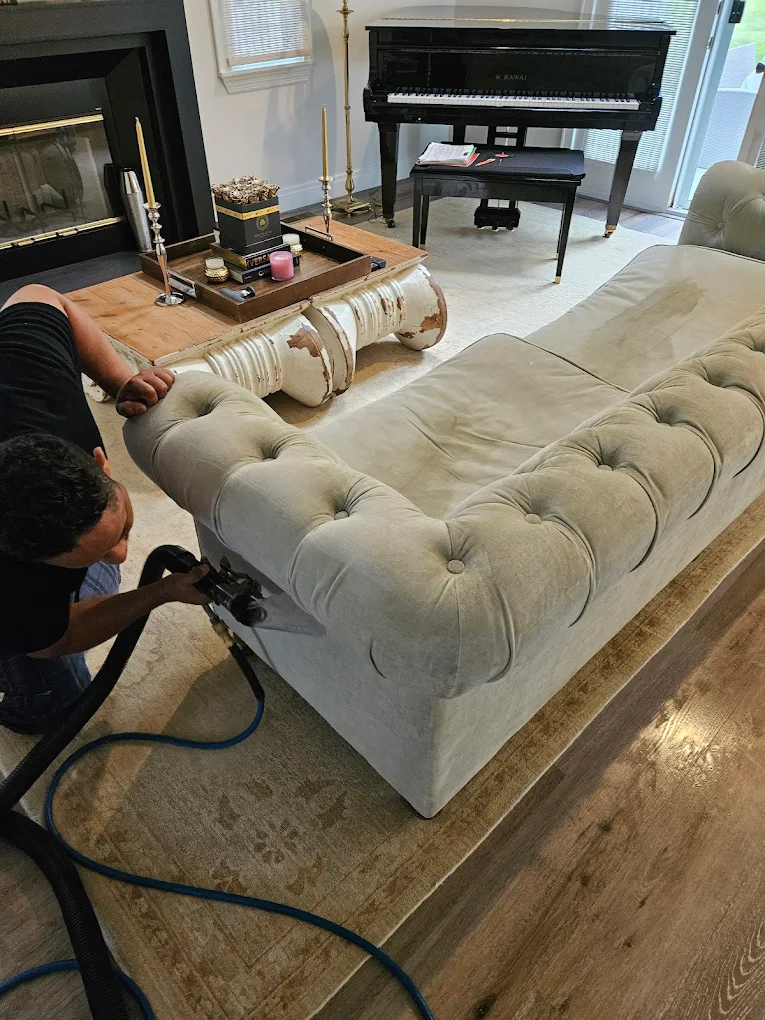
Arms, headrests and seat fronts get the most hand work on every piece we clean, from small loveseats to big sectionals. At the start of this November, for example, our crews cleaned two loveseats in Deer Park and an L-shaped sectional in Holtsville. The steps are the same every time:
Check and test
We read the fabric code, test a hidden area, point out wear that will not change, and confirm the price.
Dry soil out
A slow, careful vacuum of the arms, back and seams removes dust and hair before anything wet touches the fabric.
Break down the oil
The dark areas get a pre-treatment made for oily soil, given time to work, and a gentle brush, not a scrub.
Rinse and dry evenly
We clean the whole piece, not just the arms, so it dries in one even color with no rings or edges.
Our upholstery cleaning page lists everything we clean, and our couch cleaning page explains what a visit looks like in your living room.
Recliners, pets and the favorite seat
A fabric recliner is the classic case: one person, many hours a day, head always in the same spot. Its headrest is often the darkest fabric in the house.
Dogs that lie along the back of the sofa leave skin oil and dander too. If there is also an odor or an accident in the cushion, that is a different job; our pet stain and odor cleaning treats it at the same visit. Dining chairs get the same dark fronts on the seat edge, and our seat cushion cleaning covers those.
Be honest about wear: on an older sofa the "dark" area is sometimes thin, worn fabric or sun fading, not soil. Cleaning will brighten it, but it cannot rebuild worn fibers. We show you before we start so there are no surprises.
Keeping the arms clean after cleaning
- Vacuum the arms and the top of the back once a week.
- Put a washable throw over the favorite seat and the dog's spot.
- Let hand cream soak in before you sit down for a movie.
- Plan a full professional cleaning about once a year, or sooner for a recliner or pet seat.
What it costs
Upholstery cleaning starts at $119. Sofas, sectionals and chairs are priced by size and fabric, and you get the price before we start. Booking online takes $20 off. Our guide on what couch cleaning costs on Long Island explains what changes the total. Many customers do the sofa and the carpet on the same visit; see our main page on carpet cleaning Long Island for carpet prices.
Around Long Island
Dark sofa arms are the same story in a Cape in Nassau and a ranch in Suffolk. Our crews work in towns like Deer Park, Holtsville, Massapequa, Merrick, Garden City, East Meadow, Commack and Levittown. See every town on our service areas page, or read more about Long Island carpet cleaning.
Ready to get the arms and headrests back to one color? We test the fabric, confirm the price before we start, and most sofas are dry the same day. Booking online takes $20 off.
Call (516) 708-0278 Book online, save $20